HIMALYA Philosophy
Nov 18, 2025
What we can learn from the Asian massage culture
I was sitting in a temple in Bangkok. Around me, students practiced the same movement for hours. Slowly. Thoughtfully. With a patience I hardly knew from my life in Europe.
My teacher came over, corrected my hand position, then stopped and said something I only really understood months later.
“You’re doing the movement correctly. But your mind is somewhere else. The body needs your technique. It needs your presence.”
That was the moment I realized: massage in Asia is fundamentally different from what we usually know in the West.
Two worlds, two philosophies
Let me show you the difference as I experienced it over years in Thailand, Nepal and India.
In Austria, Germany and much of the West a typical massage looks like this: you book online, arrive on time, the therapist is professional and friendly, the session lasts 50–60 minutes, you pay and go back to your day.
It’s efficient. It’s professional. But something essential is missing.
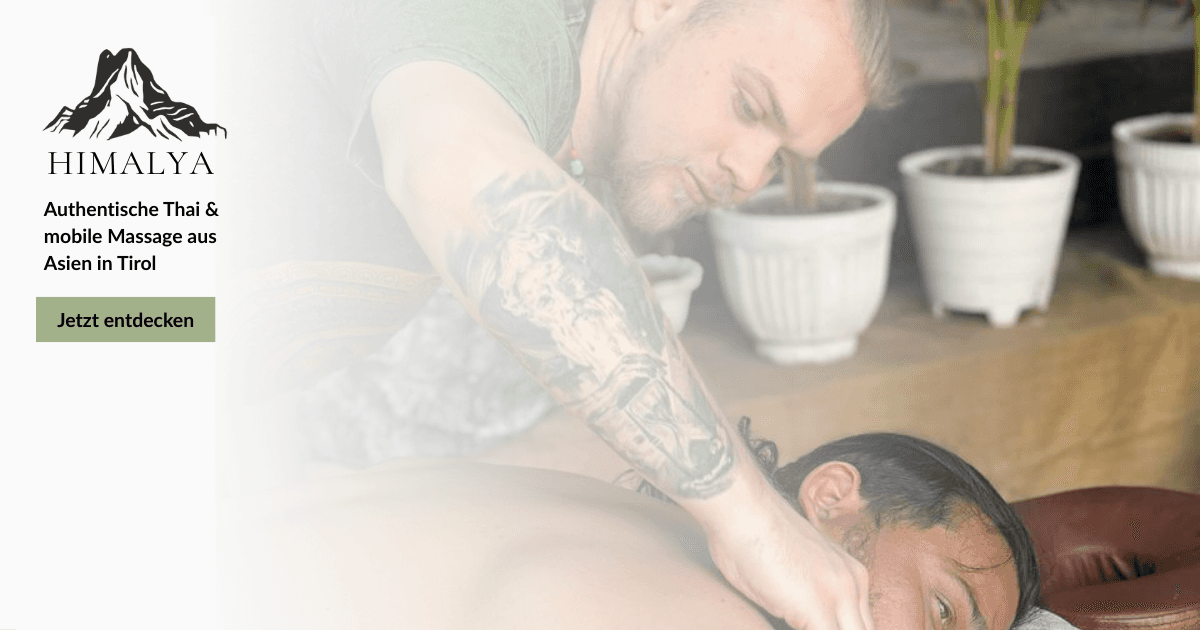
In Asia I experienced something completely different. When you visit a traditional masseur, the session starts before the first touch: they ask about your life — your work, your family, what preoccupies you.
That’s small talk and diagnosis at the same time. The masseur wants to understand who you are, how you live, what your body is going through.
What empathy really means
“Empathy” can sound soft or even esoteric. In Asian massage culture it’s concrete.
Empathy means the therapist is fully present with you — whole attention, whole awareness. They work on your body and are fully in the here and now. They feel every tiny change under their hands.
I learned this with Dao in Chiang Mai. She works with an intensity that sometimes approaches the pain threshold. But at the same time she senses every small shift in my body. When a muscle begins to release she adapts pressure. If I tense up, she waits until I let go.
This can be learned. It’s a way of being with people.
In Europe we often lost this ability — we live so much in our heads that we forget how to really feel. To be truly present with the person lying in front of us.
The first lesson from Asian massage culture: presence matters more than perfection.
Time — the fundamental difference
In Asia, time has a different meaning. You notice it right away in a traditional session.
In Tirol and much of Europe life is driven by time. Every minute is scheduled; efficiency is the highest value. A massage must fit between a meeting and dinner.
In Thailand, Nepal, India, time is organized differently. Yes, there are appointments, but life adapts to what is needed. The practitioner follows the body within the frame of time.
For a traditional massage this means: the body receives the attention it currently needs. There is a structure, but inside that structure the therapist follows the body, not the clock.
It’s a subtle but crucial difference — quality of attention inside the available time.
Touch as communication
Western culture has a complicated relationship with touch. We reserve it for intimate relationships; professional touch can feel distant and mechanical.
In Asia touch is a language. The therapist speaks with hands: how does this tissue respond? The pressure asks a question; the tissue answers.
I felt this most strongly during training. My teachers placed their hands with a quality that is hard to describe: therapeutic, respectful, listening.
We’ve unlearned that therapeutic touch can be healing because touch is easily sexualized in the West. But therapeutic touch is simply communication between two people through the body.
Family values — why massage is normal in Asia
In Asia massage is everyday. Families massage each other — grandparents, siblings — as normal as eating together.
This stems from deep cultural roots: family is central and caring for one another is a given. Massage is an expression of that care.
In Tirol, massage is usually a bought service — professional, not part of family life. But at heart it’s human care: touch that shows concern.
I want to bring that aspect to Tirol. Massage should feel more intimate, more accessible, often mobile and performed in familiar surroundings.
What really matters — Asia vs. Europe
Here’s the core difference: in Europe we define ourselves strongly by achievements: profession, status, output. Work often overshadows everything else. Recovery becomes a tool to be efficient again.
In Asia I observed a different priority: family first, community second, work important but not the total measure of the person.
This attitude shows in how people treat their bodies. I saw people who were poor by Western standards yet consistently went for massage and cared for their bodies. It was not luxury — it was respect.
Lesson three: the body is the home you live in — it deserves care, not only optimization.
The mobile massage approach — Asia meets Tirol
This is at the heart of HIMALYA. I bring the Asian attitude to massage into Tyrolean homes.
When I come to your place I bring more than technique: I bring atmosphere, mindset and how to work with a body that’s already in a familiar space.
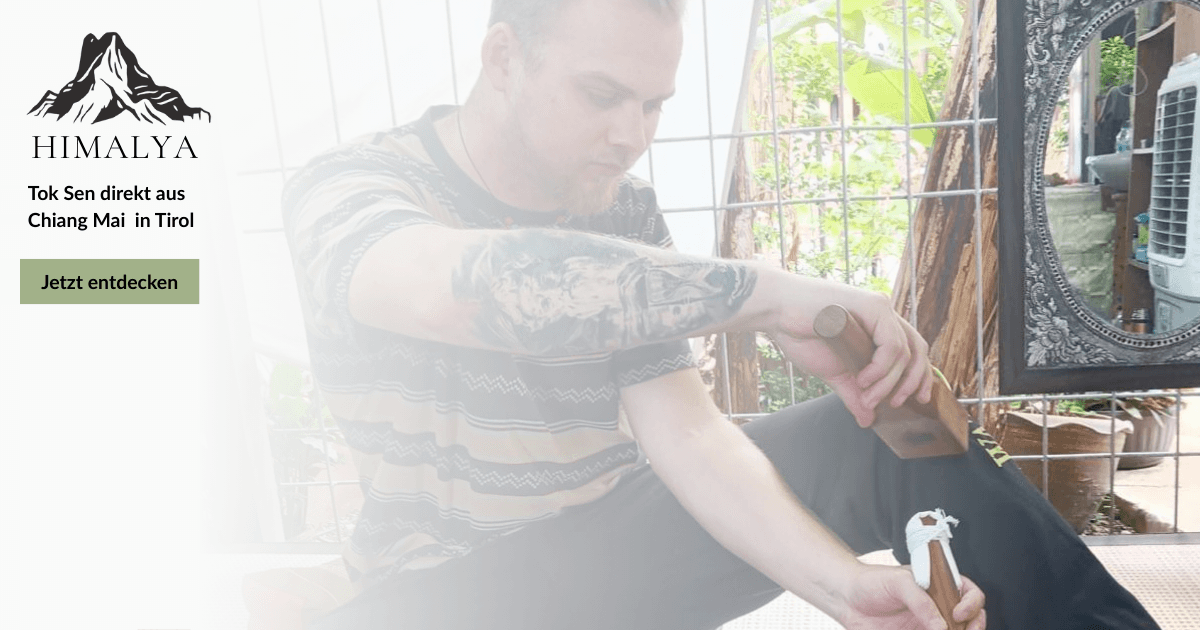
I bring my Thai futon or a table, depending on what fits. I bring Tok Sen tools — the wooden hammer and wedges from Tamarind wood I learned to use at Wat Sri Supan in Chiang Mai.
Soft Asian music in the background shifts the nervous system: it signals that this time is different from daily stress.
But most importantly I bring attitude: presence, time, listening, and willingness to follow the body rather than a rigid protocol.
That is the Asia-vibe in your living room.
Why mobile massage matters
Mobile massage is still unusual here. People assume a “proper” treatment must happen in a studio.
In Asia it’s often the opposite: mobile masseurs go house to house; healers work in patients’ homes. Healing in familiar surroundings is normal.
There are clear advantages: travel stress is removed, your safe space enhances relaxation, and you can integrate the session afterwards — lie down, rest, sleep. Driving straight into traffic after an intense treatment reduces the effect.
The art of listening
In Asian tradition there’s a concept hard to translate: “speaking with the body.” I call it the art of listening with hands.
Dao taught me: place hands, wait, feel. The body tells where the real issue is — often not where the pain points show. You might think the neck is the problem but the root is the hip.
This is different from a Western plan-based approach. Ask the body: what do you need today? and then listen.
Community vs individualism
A cultural difference: Europe is largely individualistic; Asia more collective. We tend to solve problems alone, which can make seeking help feel like failure. In Asia caregiving — including touch — is more normalized within the family.
I want to change the idea that massage is a luxury. It’s body care — as normal as brushing your teeth — especially needed in a stressful modern life.
What Tirol can learn from Thailand
Tirol and Thailand are different environments but share a lesson: look after the body. In Thailand bodywork is part of daily life; people go regularly as matter of course.
In Tirol we have physical traditions but often lost rituals of recovery. We may have more money, but less time. We can buy treatments but we rarely make time for them.
HIMALYA is a bridge — bringing Thai bodywork tradition and Tyrolean directness together: Asian presence and timelessness, Austrian professionalism and reliability.
The cultural fusion through touch
Massage is universal. Each culture developed its methods but the goal is the same: a person helps another through respectful, skilled touch.
I’m not copying Asia. I’m integrating: I bring empathy, presence, and timelessness; I keep Austrian directness, honesty and high execution standards.
The result is a hybrid — not purely Asian nor purely Austrian — that takes the best of both.
Why now is the right time
We live in a globally connected era and under rising stress. This is the moment to learn from Asian massage wisdom.
HIMALYA is my attempt to bring that bridge: centuries-old knowledge adapted to modern Tyrolean life.
What to expect from this connection
Book a session and you’ll get technical quality — Wat Pho training, Lanna-style stretching, Tok Sen from Wat Sri Supan — combined with the attitude behind them: presence, listening, time.
All delivered in your home environment where you feel safe and can remain afterward as long as you need.
That’s the Asia-vibe in your living room: massage as it should be — empathetic, timeless, and effective.