Thai Massage
Nov 5, 2025
Thai massage explained simply: What really happens in the body
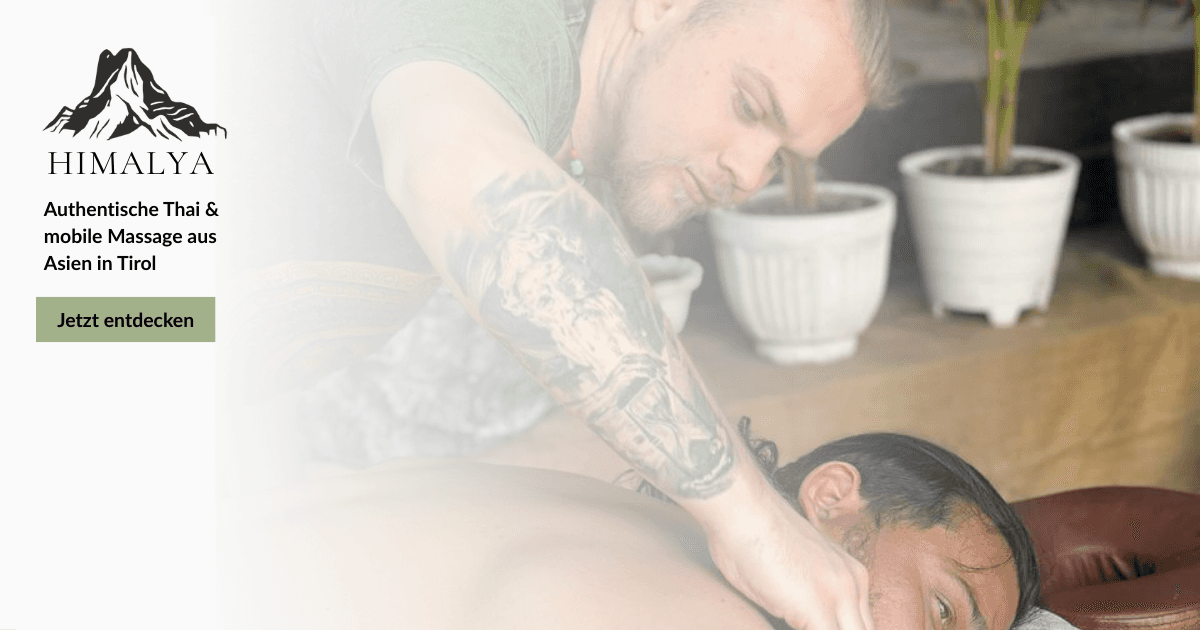
You lie on the floor. A mat beneath you. The soft sounds of the room around you. The room is simple and quiet. Someone is pressing their elbow into your calf. It is intense. Then your leg is stretched like you have never experienced before. Your body reacts for a moment — and then suddenly: Relief. This is Thai massage. And every part of it follows a system.
Between Pad Kra Pao and the hardest 1.5 months of my life
Bangkok, 2025. I stood in front of the Wat Pho Temple. THE school. The most famous Thai massage school in the world. Over 200 years old. The place where this art was preserved when it almost faded away. The next 1.5 months changed me. The intensity was real. The dedication — unmistakable. Every day, 8 hours. Learning, practicing, being corrected. Again and again the same movements. Precision above all. The original — in its purest form. Pad Kra Pao for lunch. Mango Sticky Rice as a reward. Fresh coconut from the street. Bangkok taught me that the best things take time — and that tradition survives for good reason. But the story was just beginning.
From Bangkok to Chiang Mai — the Lanna style
After Wat Pho, I traveled north to Chiang Mai. The city has a different energy. Quieter. More traditional. Here in Northern Thailand, the Lanna style is alive. I found the Ong Massage School — smaller classes, deeper focus. Here, the training focused on stretching: deep, systematic, precise stretching. The Lanna style differs from the Bangkok style:
Bangkok: powerful, direct, structured.
Chiang Mai: flowing, longer stretches, deeper openings, one technique prepares the next.
I learned how to open the body through progressive stretches, how to release tensions layer by layer, and how to give the body time to grow into each position. It was the therapeutic core of Thai massage — pure and undiluted. Then I understood something essential: Thai massage is a system, and it adapts to every body. Then came Wat Sri Supan — a temple that preserves a very special technique. There I learned Tok Sen.
Tok Sen — the hammer that calms your mind
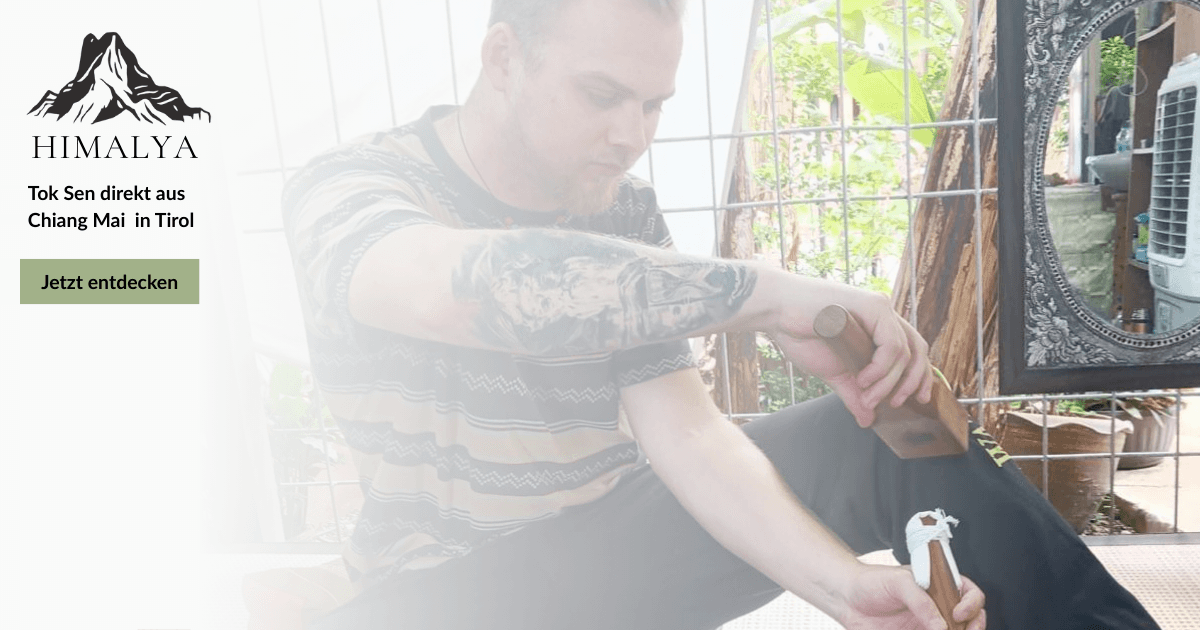
Imagine someone rhythmically tapping with a wooden hammer and a wooden wedge along your body. It is a unique experience. Tok Sen is an ancient Lanna technique from Northern Thailand. Hammer and wedge are made from tamarind wood — from a very specific part of the tree. The ancient masters say this wood possesses special qualities. The tapping follows the Sen lines — energy pathways, similar to the meridians in Chinese medicine. It is about energy, yes, but mostly about vibration. When the hammer hits the wedge and the wedge transfers the impulse into your body, a vibration travels deep into the tissue. Deeper than hands can reach. Muscles react. Fascia loosen. Adhesions release. What fascinated me most was the effect on the mind. The rhythm. The steady tapping. It becomes almost meditative. Your mind automatically aligns with the rhythm. The thoughts quiet down. The body relaxes in surprisingly deep ways. This is not magic — it is physics and neurology. Rhythmic stimulation calms the nervous system.
What Thai massage really does (clear facts)
Let’s focus on the mechanics. The anatomy. The measurable effects. Thai massage is based on three fundamental principles — all grounded in real anatomy.
Principle 1: Passive stretching When a therapist stretches you, they reach areas that active stretching can never reach. When you stretch yourself, other muscles automatically engage to protect the movement — that limits the depth. In Thai massage, you are passive. The therapist does the work. Your muscles can completely let go. This allows access to deeper layers and a greater range of motion. The result: shortened muscles regain length. Joints become mobile again. Your body remembers what natural movement feels like.
Principle 2: Deep pressure on precise points Thai massage utilizes dry techniques — no oil. Instead, we work with pressure. Precise pressure on specific points along the Sen lines. Whether you see these lines as energy channels or simply as areas where nerves and vessels run — the points work. Pressure on a trigger point leads to a measurable change: The muscle that has been tight for weeks begins to release. Not because of mystical energy, but because the nervous system receives a signal: It is safe to let go. It might hurt. Good. Pain is information. It tells you where the body needs attention.
Principle 3: The body as a system Western massage often treats isolated areas. Back pain? Massage the back. Thai massage thinks differently. Your body is a system — everything is interconnected. Tight calves may come from the lower back. Shoulder pain may originate from the hip. That’s why we always treat the whole body. A session lasts at least 90 minutes. Often longer. Not because we are wasting time, but because the body needs time to understand what is happening.
What actually happens in your body
In the muscles Chronically tense muscles have a higher baseline tension. They never really relax. This robs energy and causes pain. Pressure and stretching reduce this baseline tension. The fibers become more elastic. Circulation improves. Waste products are eliminated. After a session, your muscles feel longer — because they are.
In the fascia Fascia is the connective tissue that surrounds everything — muscles, organs, nerves. When fascia stick together, movement is restricted. Thai massage stimulates the fascia intensively: stretching, compression, rhythmic movement. Fascia need mechanical stimulation to stay healthy. Thai massage provides exactly that.
In the nervous system Your nervous system has two main modes:
Sympathetic (fight or flight)
Parasympathetic (rest and digest) Most people live in a constant activation of the sympathetic — stress, work, screens, deadlines. Thai massage forces the system into the parasympathetic mode. Slower rhythm. Constant pressure. A passive body. Everything signals: You are safe. Let go. That’s why people sometimes fall asleep — not from “relaxation,” but because their nervous system finally turns off the alarm state.
The difference between good and bad Thai massage
Not all Thai massages are the same. In Thailand, there are two worlds:
Tourist massages (300 Baht, light tapping, mostly wellness)
Traditional massage (masters with lifelong dedication)
Wat Pho belongs to the traditional world — where technique matters, effect matters, results matter.
How to recognize real Thai massage:
A real therapist uses their whole body — hands, elbows, knees, feet.
A session lasts at least 60 minutes — anything shorter cannot treat the body as a system.
The therapist is fully present — every movement is intentional.
And yes, it can be intense. It challenges your body. It takes you into new spaces.
What Thai massage really is
Thai massage is deep bodywork. It challenges you. It takes you to areas you cannot reach on your own. It is authentic traditional practice — refined over centuries. And it takes time. If your body carries years of tension and misalignments, one session will help — but several will transform you.
Why I bring these techniques to Austria
After Thailand, the question arose: What now? I could have stayed in Thailand. Or I could return and offer what everyone else offers: 30-minute sessions, quick money, diluted techniques. I chose differently. HIMALYA brings the real techniques to Austria — just as I learned them. Without compromise. This means:
Longer sessions
More intense work
Fewer clients, more presence
When you come to me, you receive the original Thai massage — the one I learned in 1.5 months at Wat Pho, refined in Chiang Mai, and deepened through Tok Sen at Wat Sri Supan. This is my commitment to the tradition that has shaped me.
What to expect during a session
You wear comfortable clothing — leggings, loose pants, a T-shirt. We work dry, directly on the floor. We start at the feet and work our way through the entire body: feet, legs, hips, back, shoulders, arms, neck. I use hands, elbows, sometimes feet. You will experience stretches that you cannot do on your own. Some feel like yoga — only I do the work and you remain passive. There will be intense moments. I regularly ask if the pressure is okay. Communication is key. Intensity means your body is working — it goes through the challenge to let go. After 90 minutes or more, you will feel different: longer, lighter, awake, centered. Some may feel a slight muscle soreness the next day — normal with deep work.
The Sen lines — a practical explanation
Thai medicine teaches 72,000 Sen lines. That sounds mystical — but think practically: Your body contains nerves, blood vessels, lymphatic pathways, fascial networks. All run along defined paths. Thai masters have mapped these pathways through centuries of observation. Whether you call them Sen lines or anatomical pathways — the points work. In practice, we work with the 10 main lines, the most influential ones. This is applied anatomy that is older than Western medicine.
Tok Sen in detail — why the hammer works
The Tok Sen rhythm lies between 30–50 Hz — the ideal frequency for muscle and fascia response. The vibration travels 4–6 cm deep into the tissue — deeper than hands can reach. Neurologically, rhythmic sensory input activates the parasympathetic — the same principle as rocking a baby or meditative drumming. Tok Sen combines deep physical effect with mental calm. That’s why it feels so unique.
The most important lesson from Thailand
Bangkok taught me one main thing: Time is your ally. Austria loves quick fixes — 30-minute wellness treatments. Thailand taught me patience. Presence. Depth. My teachers always said: “When you bring presence, the body responds. When you bring patience, the body opens.” Your body took years to become tight. It deserves more than 30 minutes to release.
What you should take away from this article
Thai massage is a system — precise, structured, and deeply effective. It improves: muscle tension, fascia mobility, joint range, and the regulation of the nervous system. If you are looking for real Thai massage, look for someone trained in Thailand — correctly, for months, not days. And when you come to HIMALYA, you now know what to expect: Real bodywork. Real results. Real tradition.
Bio Lukas completed his Thai massage training at Wat Pho Temple in Bangkok (1.5 months intensive training), deepened his practice at the Ong Massage School in Chiang Mai, and learned the traditional Tok Sen technique at Wat Sri Supan. He combines his passion for Thai massage with deep respect for the traditions that have preserved these techniques over centuries.